The Weekend-Before Checklist: Getting Your Patio Ready for Labor Day
The Weekend-Before Checklist: Getting Your Patio Ready for Labor Day
By the weekend before Labor Day, the decision-making from earlier in this series is done — you either have an awning, a screen, a pergola, or none of the above, and the party is happening regardless. This is the practical, five-minute-per-item checklist for whatever you're working with, covering both the outdoor structure and the parts of a cookout that have nothing to do with what Decadent Outdoors sells.
The structure: five minutes, before guests arrive
If you have a motorized awning or screen, run it in and out once before the day of the party — not for the first time with guests standing there. A remote with a dying battery or a track with a summer's worth of leaves and pollen in it is a five-minute fix now and an awkward ten-minute delay later. Check the fabric itself for any tear or fraying at the seams; small damage found now is a patch, not a replacement.
If something doesn't respond — the motor hesitates, the remote isn't pairing, the screen binds partway through the track — that's worth a quick service call this week rather than waiting until it's completely stuck. A same-week tune-up is a very different appointment than an emergency call on the holiday itself.
The grill: the part of Labor Day prep that actually causes harm
This is worth taking seriously rather than treating as an afterthought. Per National Fire Protection Association data, U.S. fire departments responded to an average of over 12,000 home fires per year involving grills, hibachis or barbecues between 2020 and 2024, and gas grills specifically accounted for the large majority of those incidents. Leaks or breaks in the gas line were among the leading contributing factors, and roughly a quarter of home structure fires involving grills started on an exterior balcony or open porch — exactly the kind of space this series has been talking about all month.
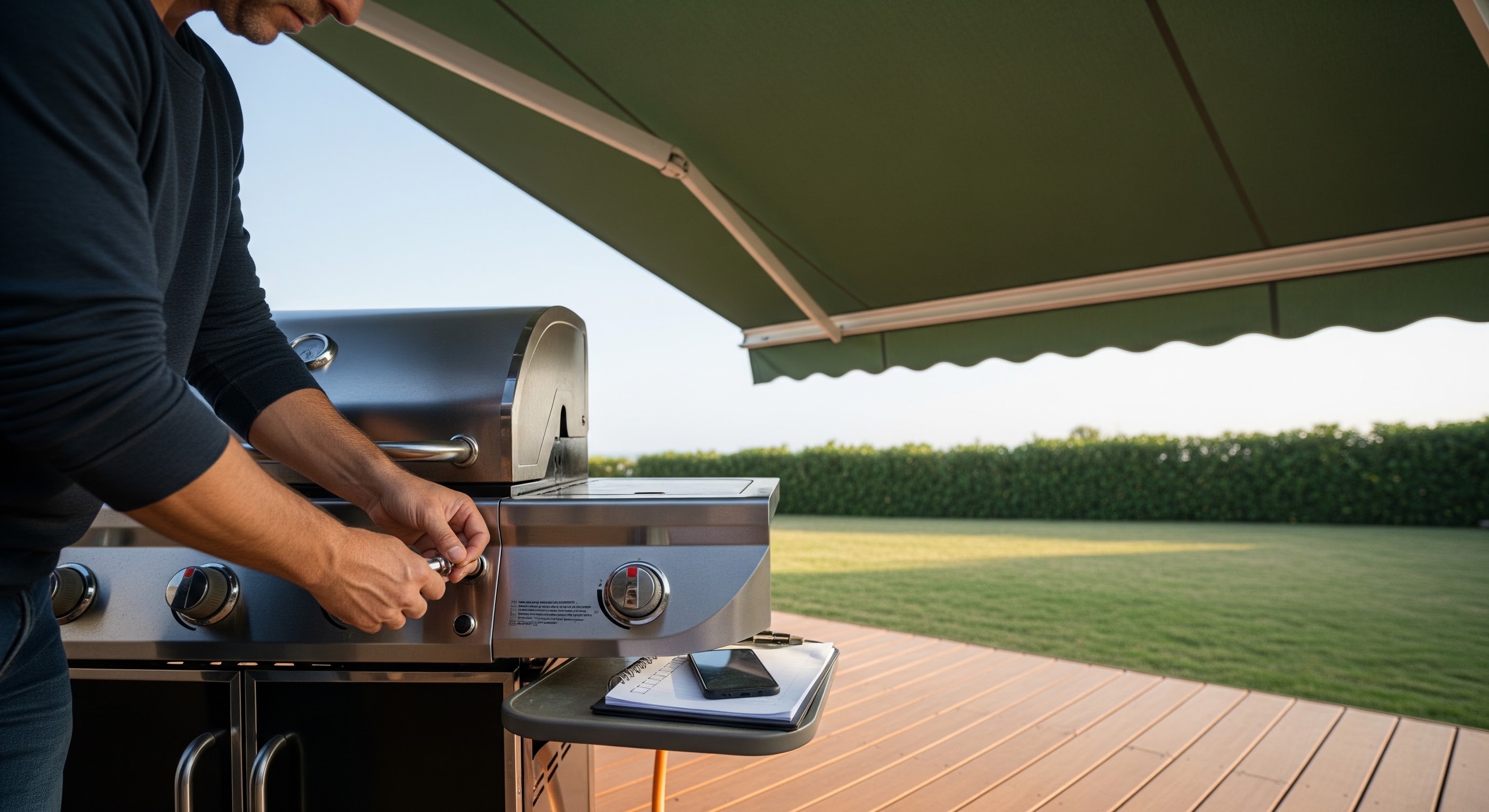
The weekend-before version of this is simple: check the gas line and connections for leaks (a soapy-water test on the fittings will show bubbles if there's a leak), clean built-up grease from the grates and catch tray, and make sure the grill sits with real clearance from any structure — including an awning, a screen enclosure, or a pergola. A covered structure is exactly the kind of nearby surface these statistics point to, so grill placement matters even more under one than in the open yard.
The bugs: still a September problem, per the state
As the first post in this series covered, mosquitoes remain active statewide from April through October per New York State Department of Health guidance — Labor Day is not near the tail end of that window, it's comfortably inside it. If your gathering doesn't have a screened structure, this is the weekend to restock repellent and citronella rather than discover the gap when the sun starts going down.
The rest of it
None of this is exclusive to outdoor structures, but it's worth a line each: confirm your propane tank has enough fuel for the full cook (not just "probably"), count seating against your actual guest list rather than an optimistic estimate, and check the extended forecast a few days out rather than the morning of — this series' first post covered just how fast September weather here can turn.
Frequently Asked Questions
How common are grill fires, really?
Per National Fire Protection Association data, U.S. fire departments responded to an annual average of over 12,000 home fires involving grills, hibachis or barbecues between 2020 and 2024. Gas grills accounted for the large majority of these incidents, with leaks or breaks in the gas line among the leading contributing factors.
How far from my house should the grill be, especially under a covered structure?
NFPA data shows roughly a quarter of home structure fires involving grills started on an exterior balcony or open porch, underscoring the importance of real clearance from any structure — a wall, railing, or an overhead cover such as an awning or pergola. Follow the clearance distance printed in your specific grill's manual, and never operate a grill directly beneath a retracted-but-nearby fabric structure.
Should I test my motorized awning or screen before the day of the party?
Yes. Running it once ahead of time catches a dead remote battery, a debris-clogged track, or a slow motor while there's still time for a quick fix or service call, instead of discovering it with guests already arriving.
Sources
National Fire Protection Association. U.S. Grilling Fires Peak During Warmer Months. 2026 data release, covering 2020–2024 averages.
New York State Department of Health.Reminds New Yorkers to Protect Themselves From Mosquito-Borne Diseases. July 15, 2026.