
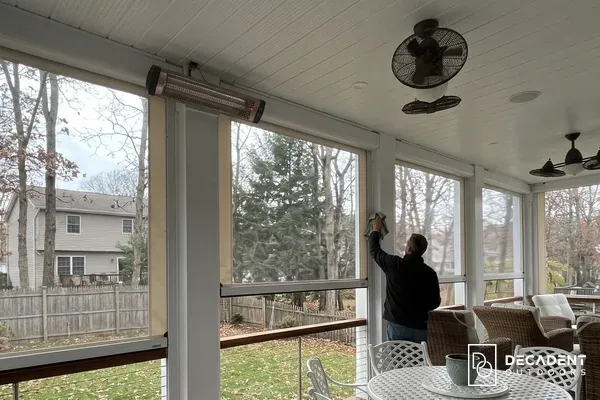
Before the First Snow: A Winter Checklist for Your Albany Patio
Get your patio ready before Albany's first measurable snow, which arrives around November 16 in an average year, according to CBS6 Albany’s review of National Weather Service records. Four jobs matter most: roll your motorized screens and clear vinyl up before a deep freeze (but if a vinyl panel is already down when the cold hits, leave it down), open your pergola's louvers before a snowfall, clean and check your heaters, and move every propane cylinder outdoors, upright and away from the house. An hour on a dry November afternoon protects equipment you'll want working in March.
Quick Answers
When should you winterize your patio in Albany?
Before mid-November. CBS6 Albany, drawing on National Weather Service records, puts Albany’s average first measurable snowfall (a tenth of an inch or more) around November 16. Snow has come much earlier: the NWS lists 6.5 inches on October 4, 1987 as Albany’s earliest measurable snowfall on record. November itself is usually light, with 2.6 inches in a normal month, but December jumps to 13.3 inches. That makes a dry afternoon in early or mid-November the best time to work through the checklist, before the first real storm and the freeze-thaw cycles that follow it.
Should pergola louvers be open or closed in snow?
Open. StruXure recommends keeping louvers open during active snowfall so snow passes through, instead of piling up and freezing the louvers shut. It adds that the system is engineered to carry the weight if the louvers are accidentally left closed in an isolated instance. Treat that as a safety margin, not a plan, because not every pergola is engineered for the snow load where you live. Open the louvers before the storm starts, since a power outage can leave closed louvers stuck closed, and ask your installer whether a rain sensor could close them when the snow begins.
Should motorized screens stay down in winter?
Roll them up before snow, ice or a deep freeze, so the fabric sits protected in its housing. Clear vinyl is the exception: if a panel is already down when the cold arrives, leave it down. Wait for a milder day and a dry panel, then roll it up. Never roll a screen up wet; the Fenetex® Owner’s Guide says not to raise screens until they’re completely dry. And if a track is iced over or a screen is frozen to the bottom rail, don’t force it with the motor. Let it thaw, or call your installer.
Can you run clear vinyl screens below freezing?
Don’t roll it up in the cold. Vinyl expands as it warms and contracts as it cools, and a cold, stiff panel doesn’t roll up well. Forcing it can damage the screen. The best habit is to roll vinyl up before a deep freeze. If it’s down when the freeze arrives, leave it down until it warms up and dries, then raise it. With a normal Albany January low of 15.9°F, deep cold arrives early and stays, so plan the job for a dry November afternoon. Clean and polish the vinyl first; Fenetex’s Owner’s Guide recommends a clear vinyl cleaner and polish every six months.
Where should propane cylinders go for the winter?
Outdoors, upright, in a ventilated spot, and never in your house, garage, basement or shed. Fire-safety guidance is consistent on this. Set each cylinder on a firm, level surface, away from heat and anything that could ignite it. When a grill or a propane patio heater comes inside for the winter, disconnect the cylinder first and leave it outside. If you have an electric infrared heater, keep cylinders at least 25 feet from it, as Infratech’s manual requires. A spare tank doesn’t belong under your heated roof, however convenient it looks in November.
Why does an hour in November matter so much?
You invested in a patio that's supposed to work past Labor Day. The worst way to lose it is not to weather. It's to a screen that froze in its track, a louver roof that iced shut under a foot of snow, or a heater that won't switch on the first cold evening in March. None of that is bad luck. It's what happens when an Albany winter meets equipment that was put away the way you'd put away a lawn chair.
The numbers explain the urgency. National Weather Service normals for Albany put seasonal snowfall at 59.2 inches, with 15.6 inches in a normal January, 13.7 in February and 12.0 in March. That's a lot of weight, wet cold and freeze-thaw for your patio to sit through. An hour of preparation before mid-November is the cheapest protection you'll buy for it all year.
How do you get each part of your patio ready?
This checklist is organized by what you own. Skip the sections that don't apply to you.
Your louvered pergola
A motorized louvered roof is the piece of your patio most affected by snow, and the fix is simple once you know it.
Open the louvers before snow falls. StruXure's guidance is to keep louvers open during active snowfall. Open louvers let snow fall through the roof instead of collecting on it, which takes weight off the frame and motor and keeps the louvers from freezing shut. Once the snow stops and temperatures rise, open louvers also let snow and ice melt and drain faster.
Check how your rain sensor behaves in snow. StruXure's optional rain sensor closes the louvers automatically when it detects rain, and one StruXure article describes the roof closing when snow or rain is detected. That's the opposite of what you want during a snowstorm. Ask your installer how your sensors are set, and whether they should change for the winter.
Open the louvers before a storm, not during it. If the power goes out with the louvers closed, they stay closed. StruXure's storm-prep guidance for wind events is to open the roof well ahead of the storm, then shut off power to the pergola at the breaker. The same logic applies to a big snow forecast.
A word on snow load. StruXure says its system can carry the weight if the louvers are left closed by accident once in a while. That’s a safety margin, not a plan, and not every pergola is built the same way. Some manufacturers engineer their standard designs for heavy snow loads, and some don’t. If the louvers stay closed through heavy snow on a pergola that wasn’t engineered for the snow load where you live, the weight can distort the louvers. Before you buy, check the manufacturer’s snow load rating. That’s why Jeff builds the local snow load into every Decadent design plan.
Clear the gutters and drains. StruXure's louvers channel water into an integrated perimeter gutter. StruXure’s snow guidance also tells owners to clear debris. A quick clean-out before the snow keeps melt water moving.
Don’t climb on it. If snow does collect on the roof, don’t climb on the structure to clear it. Call your installer.
If you're still deciding on a pergola, Decadent is the exclusive StruXure dealer for the Capital Region, as stated on its site.
Your motorized screens and clear vinyl
Your motorized screens are fabric and vinyl on a motor. Winter is hard on all three.
Roll them up for snow and ice. Rolling screens up into their housing before snow, ice or a deep freeze protects the fabric and keeps ice from forming in the tracks.
Watch the wind and the forecast. Fenetex’s Owner’s Guide says that in high winds a screen may stall on its way down; stop it, wait for the wind to settle and try again. The same guide says not to deploy screens in severe weather.
Treat clear vinyl differently from mesh. Clear vinyl is the panel that makes a winter patio possible, and it’s the most sensitive to temperature. Vinyl expands in warmth and contracts in cold, and a cold panel stiffens and doesn’t roll up well. The best habit is to roll your vinyl up before a deep freeze. If a panel is already down when the cold arrives, leave it down. Trying to roll up cold vinyl can damage the screen. Wait for a milder day and a dry panel, then raise it.
Clean before you store. Fenetex’s Owner’s Guide gives the method: wash the screen and tracks with a soft brush and mild detergent, rinse, and let everything dry completely before raising the screens. Don’t spray water into the housing or onto the reel, since that can damage the motor, and skip the pressure washer. For clear vinyl, the guide recommends a clear vinyl cleaner and polish after cleaning, every six months.
Use the right lubricant, or none. Fenetex’s Owner’s Guide says to use only a Teflon-based dry lubricant on the tracks, and never silicone or oil-based products. It also recommends having your installer inspect, adjust and lubricate the tracks once a year, which is a good job to book before the snow.
The first guide in this series covers what clear vinyl can and can't do for a winter patio.
Your heaters
Here's the irony of a winter patio: your radiant heater gets its hardest use in exactly the months you're least likely to check it.
Switch it on now. Run every heater for a few minutes on a dry day before you need it. Finding a problem in November is far better than finding it on the first cold evening.
Clean it with the power off. Infratech’s manual says to turn off the power and let the heater cool completely before any maintenance. Wipe the housing, end covers and reflectors with a clean, scratch-free rag and a mild detergent, warm water or isopropyl alcohol, then dry the heater thoroughly before you reconnect the power. While you’re there, look for surface rust, which the manual calls an early sign of corrosion. If you own a different brand, follow its manual.
Clear the clearance zone. Look at what has collected within the distances in your heater's manual over the summer: a new umbrella, a hanging plant, a stack of cushions. Move it.
Check the controls. Test the dimmer, the remote and any smart-home routine. Replace remote batteries.
Book the wiring check. Infratech’s manual recommends that a licensed electrician inspect the heater’s wiring connections every year.
If your heater runs on gas or propane: have the connections checked before the season, and follow the manual for storage. Fire-safety guidance for propane patio heaters says to remove the cylinder before storing the heater indoors, and to store the cylinder outdoors.
Grills, propane and the rest of the patio
Move propane cylinders outside. Fire-safety guidance is consistent: propane cylinders are stored outdoors, upright, on a firm surface, in a ventilated area, and never in a house, garage, basement or shed. Grill manuals add that when a grill comes indoors for the winter, the cylinder is disconnected and stays outside.
Store or cover what can't take snow. Cushions, throw pillows and anything that soaks up water should come inside or into a dry storage box. Check your furniture maker’s care guidance before you cover anything.
Test your CO alarms. Your heated patio season and your home heating season start together. The CDC recommends battery-operated or battery-backup carbon monoxide detectors near every sleeping area. Test them now.
Plan for the outage before it happens. If you own a portable generator, decide where it will go before the storm. The U.S. Consumer Product Safety Commission says generators run outside only, at least 20 feet from the house, and never on a porch or in a carport. Your covered patio is not a generator shelter.
What does each winter month ask of your patio?
The checklist is a one-afternoon job, but winter keeps asking things of your patio through March. Here's what each month brings, using National Weather Service 1991–2020 normals for Albany.
| Month | Average high | Average low | Normal snowfall | What to do |
|---|---|---|---|---|
| November | 49.3°F | 31.6°F | 2.6 in | Run the full checklist before mid-month. |
| December | 38.2°F | 22.7°F | 13.3 in | Open louvers ahead of each snow. Roll vinyl up before deep cold; if it’s already down, leave it down. |
| January | 32.8°F | 15.9°F | 15.6 in | The snowiest normal month. Check gutters and tracks after each storm. |
| February | 36.0°F | 17.6°F | 13.7 in | Freeze-thaw season. Clear ice from screen tracks before operating. |
| March | 45.3°F | 26.1°F | 12.0 in | Test heaters and controls. Clean screens before first use. |
Source: National Weather Service, Albany NY, 1991–2020 climate normals.
Two things stand out. December jumps from 2.6 to 13.3 inches of normal snowfall, so the checklist really is a November job. And January carries the most normal snowfall of all, so the job of opening louvers before a storm doesn't end after the holidays. March still averages a foot of snow, so the spring start-up on your patio comes later than the calendar suggests.
Which winter mistakes cost patio owners the most?
Most winter damage comes from a few predictable decisions. You can sidestep all of them.
Leaving the louvers closed "to keep the snow off." It feels protective. It's the opposite. Closed louvers collect snow and can freeze shut, and the structure carries weight it didn't need to. Open them before the snow.
Running a screen through ice. If a track is iced over or the screen is frozen to the bottom rail, don’t force it with the motor. Let it thaw, or call your installer.
Rolling up cold vinyl. A cold panel is stiff and has shrunk. Forcing it onto the roller can damage the screen. If it’s down when the freeze hits, leave it down until it warms up.
Storing propane in the garage. It’s an easy shortcut, and fire-safety guidance consistently warns against it. Cylinders live outdoors.
Rolling up wet fabric. Mesh or vinyl rolled up wet can trap moisture in the housing. Fenetex’s Owner’s Guide says not to roll screens up when they’re wet, so let them dry first.
Waiting until March to test the heater. By then you want to use it. Test it in November, and again before spring.
Treating the patio as a storm shelter. A covered patio is not the place for a generator, a grill or a propane heater during a power outage. The CPSC says generators belong at least 20 feet from the house and never on a porch or in a carport.
What does the finished checklist look like?
Here is the whole list in one place, so you can work through it on a single afternoon:
Pergola: louvers set to open before snow, sensor behavior checked, gutters cleared.
Screens: cleaned, dried, tracks checked (Teflon dry lube only), rolled up for snow and ice, annual installer service booked.
Clear vinyl: cleaned without grit, polished, rolled up before the deep freeze (if it’s down when the cold hits, leave it down).
Heaters: test-fired, cleaned with the power off, clearance zone cleared, controls tested, wiring check booked.
Propane: every cylinder outdoors, upright and away from ignition sources.
Soft goods: cushions and pillows inside or in dry storage.
Safety: CO alarms tested, generator location planned at least 20 feet from the house.
Do that, and the first cold evening in March starts with a switch, not a service call.
What is your next step?
If something on this list doesn't work the way it should, or you'd rather not climb a ladder to find out, a site visit is the fastest way to know where you stand. And if your patio isn't ready for winter at all yet, that same visit is where a heated, protected season starts.